temperate rainforest · old growth · the cathedral
where it never stops growingHoh Rainforest
A temperate rainforest unlike anywhere else in the lower 48. Trees draped in club moss, ferns six feet tall, Sitka spruce over a thousand years old, and one of the quietest places on earth. Plan an entire day.
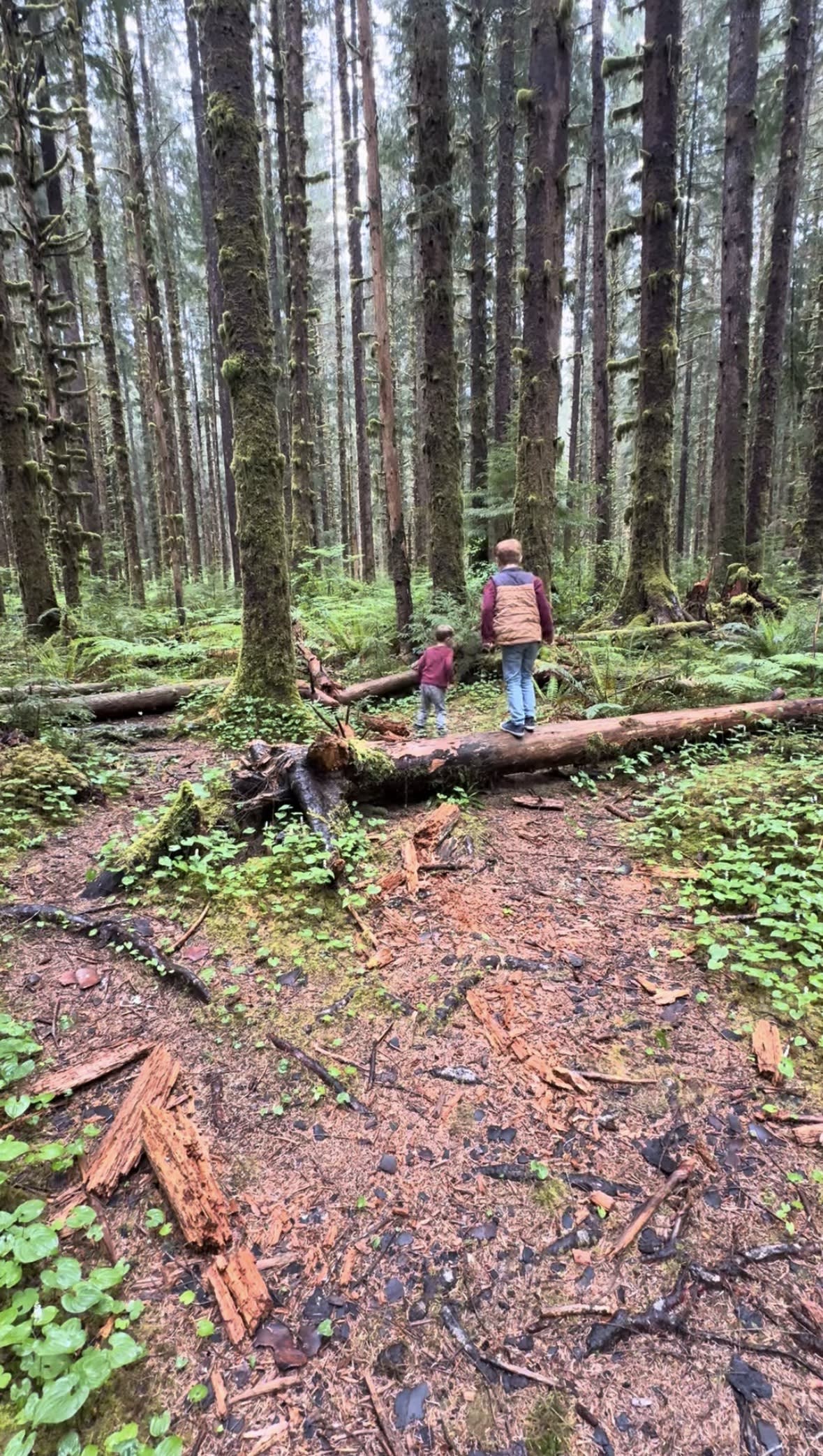
Hoh Rainforest in 60 seconds
2. Spruce Nature Trail. 1.2-mile loop along the Hoh River through old-growth Sitka spruce.
3. Stand still on either trail for two minutes. Hoh is one of the quietest places on earth, and kids notice it.
getting your bearings
A rainforest that never stops growing
The Hoh Rainforest is one of the largest temperate rainforests on the planet. This is not a tropical rainforest. The Hoh stays cool year-round but gets enormous amounts of rain (140-170 inches annually), creating an environment where moss grows on every surface, ferns reach six feet, and trees grow to ridiculous sizes. Some of the Sitka spruce here are over a thousand years old. Standing among them feels like being in a cathedral.
The Hoh is also one of the quietest places on earth. Acoustic ecologist Gordon Hempton identified a square inch in the Hoh as among the most pristine quiet zones in the United States. If you stand still for a few minutes, you'll start to hear things you forgot existed. Wind through the canopy. Distant elk. Water dripping. The forest itself.
For families, plan a full day here. The visitor center has interpretive exhibits, a gift shop, and ranger-led activities in summer. Two short trails (Hall of Mosses 0.8 mi, Spruce Nature Trail 1.2 mi) leave from the visitor center and are doable for kids of any age. The Hoh River Trail goes deeper into the rainforest for those wanting more. The visitor center parking lot fills by mid-morning in summer. Get there early or be ready for a long single-file line on Upper Hoh Road waiting for spots.
About Roosevelt elk
The Hoh Valley is home to one of the largest unmanaged Roosevelt elk herds in the country. You will likely see them. Often grazing in meadows along Upper Hoh Road or even right at the visitor center. Stay 75 feet away. Roosevelt elk can be aggressive, especially during fall rut (September-October) and when calves are present (May-June). Don't approach. Don't feed. Watch from a respectful distance and they're a highlight of the trip.
getting in & getting around
The road in off 101
The Hoh sits 17.5 miles off Highway 101 down Upper Hoh Road. Once you turn off, there are no services until you turn around. Plan for a roundtrip with no shortcut.
About 1 hour. Take Highway 101 south for 13 miles, then turn east onto Upper Hoh Road for 17.5 miles. Park entry fee required: $30 per vehicle for a 7-day pass, or use your America the Beautiful pass.
About 2.5 hours direct. Most travelers combine this with a Forks stay rather than driving from PA each day. Don't try to day-trip.
17.5 miles of paved road, but narrow with curves through old-growth forest. Speed limit 35 mph and you'll want to drive it. Beautiful drive in itself. Watch for elk crossing the road.
The lot fills by mid-morning in summer. When it's full, rangers run a one-in-one-out system with cars lined up single-file on Upper Hoh Road sometimes for 30+ minutes. Get there before 9 AM or after 4 PM to avoid this. Spring/fall are easier.
No signal once you turn off Highway 101. Download maps before you leave Forks. The visitor center has Wi-Fi but it's slow.
Upper Hoh Road is fine for any rig under 30 feet. Anything bigger, drive slow. The visitor center parking has dedicated RV spots but they fill fast in summer. The Hoh Campground accommodates rigs up to 21 feet.
Check the road before you drive out
A December 2024 storm flooded the Hoh River and washed out sections of Upper Hoh Road, the only way in to the visitor center and campground. The road stayed closed for months and reopened in May 2026. This road has a history of flooding, so check the Olympic National Park alerts page for current conditions before you make the drive, especially in winter and early spring.
the must-sees
Don't miss in the Hoh
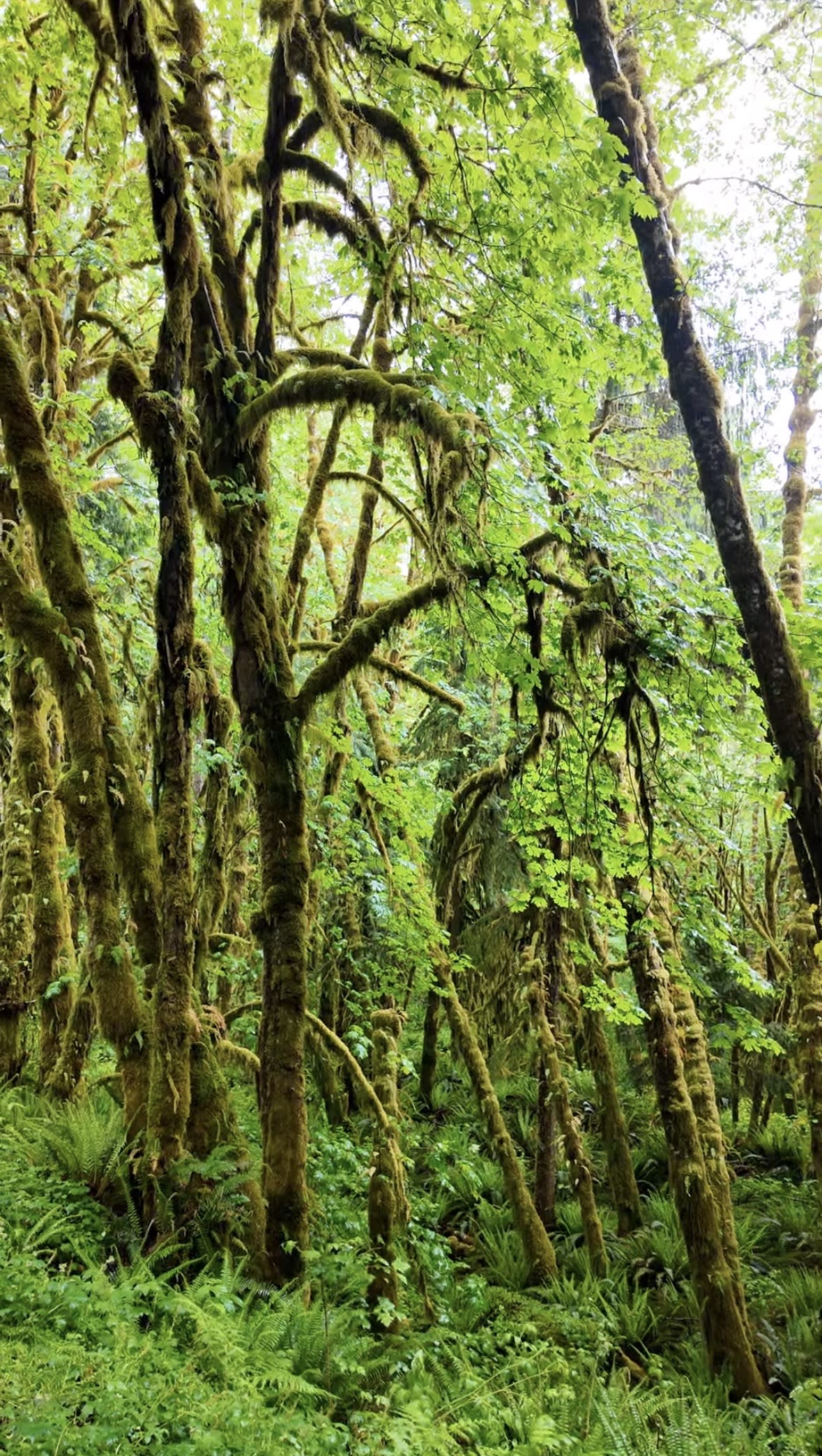
Hall of Mosses Trail. The 0.8-mile loop everyone comes for. Massive bigleaf maples draped in club moss, a small grove that feels like it's from another planet. Plan 30-45 minutes including stops for photos. Even kids who don't like hiking love this trail.
Spruce Nature Trail. A 1.2-mile loop from the visitor center, slightly less famous than Hall of Mosses but equally beautiful. Goes along the Hoh River with a few small interpretive signs about the rainforest ecosystem. Less crowded than Hall of Mosses. Easy walking, mostly flat.
Visit the Visitor Center. Small but worth 20-30 minutes. Interpretive exhibits about the rainforest, ranger talks in summer, a short film about the Hoh, and a gift shop. Pick up the Junior Ranger workbook if you have kids. The Hoh's program is excellent.
Spot Roosevelt elk. The Hoh Valley has one of the largest unmanaged Roosevelt elk herds in the country. You're almost guaranteed to see them. Best spotting at dawn and dusk in meadows along Upper Hoh Road or at the visitor center clearing. Stay 75 feet away. Don't approach. Bring binoculars.
Hoh River Trail (partial). Most families don't do the full backcountry version (35+ miles to Glacier Meadows). But the first 2-5 miles are as pretty as anything in the park. Walk to the Mt. Tom Creek Meadows or Five Mile Island for a half-day adventure. Mostly flat with old-growth scenery the whole way.
Stand still and listen. Find a quiet spot off the trail (stay on durable ground) and just stand there for 5 minutes. The sound of the rainforest is the experience here. Wind through canopy 200 feet up, water dripping, distant elk. It's the kind of quiet most people never experience anywhere else.
kids pick
Hall of Mosses + Junior Ranger workbook
Walk the Hall of Mosses slowly with a Junior Ranger workbook in hand. Kids spot moss types, identify ferns, look for elk signs, and earn a real wooden badge from a ranger when they finish. Even the most stroller-bound toddler is into this. The trail is short enough that no one melts down. The workbook keeps older kids engaged for hours.
The moss isn't hurting the trees
All that club moss hanging off the branches looks like it's smothering the trees, but it isn't a parasite. It's an epiphyte. It just perches up there and pulls what it needs from the rain and the air, not from the tree. Some of it even drops down and feeds the forest floor. Ask the kids what the difference is between something that takes from a tree and something that just borrows a branch.
That's one lesson out of a whole region unit. Real science your kids do standing right under the moss.
See the curriculum →smaller spots most guides miss
The spots most people walk past
Most visitors do Hall of Mosses and leave. The Hoh has so much more if you stay a little longer.
One Square Inch of Silence
A specific spot in the Hoh, marked by a small red stone, identified by acoustic ecologist Gordon Hempton as one of the quietest places in the lower 48. It's about 3 miles up the Hoh River Trail. Find it, sit, listen for 10 minutes. The experience is hard to describe.
Mt. Tom Creek Meadows
A small clearing about 2.5 miles up the Hoh River Trail. Often has Roosevelt elk grazing in the early morning. Quiet alternative to the popular short loops. Easy walking the whole way.
Hard Rain Cafe
The only restaurant on Upper Hoh Road, about halfway between Highway 101 and the visitor center. Locals' diner with burgers, fries, breakfast. Surprisingly good for the only option. Stop on the way out for lunch.
Hoh River swimming holes
The Hoh River runs along Upper Hoh Road with multiple unmarked pullouts. Cold but swimmable in summer. Crystal clear glacial water. Kids love throwing rocks. Adults love finding a quiet spot. Multiple access points along the road.
The big Sitka spruce
The largest tree in the Hoh Valley is a Sitka spruce off the Spruce Nature Trail, easily over 250 feet tall and 1,000+ years old. The visitor center has a map showing where the biggest trees are. Worth a slow walk just to find them.
DNR Campground at Cottonwood
A free dispersed camping area along the Hoh River just before you enter Olympic National Park. No hookups, no services, but free. Riverside sites, perfect for vans and small RVs. Run by Washington Department of Natural Resources. Permit required (free).
Visit at sunrise
If you camp at the Hoh Campground or stay nearby, walk Hall of Mosses at sunrise. Mist still clinging to the moss. Light filtering through the canopy. Almost no other people. The best version of the Hoh, hands down.
Bogachiel State Park
123 acres along the Bogachiel River about 6 miles south of Forks, on your drive back from the Hoh. Old-growth trees, river walk, picnic spots, no crowds. Free with Discover Pass. Easy stop to break up the drive home.
trails worth doing
Hikes in the Hoh
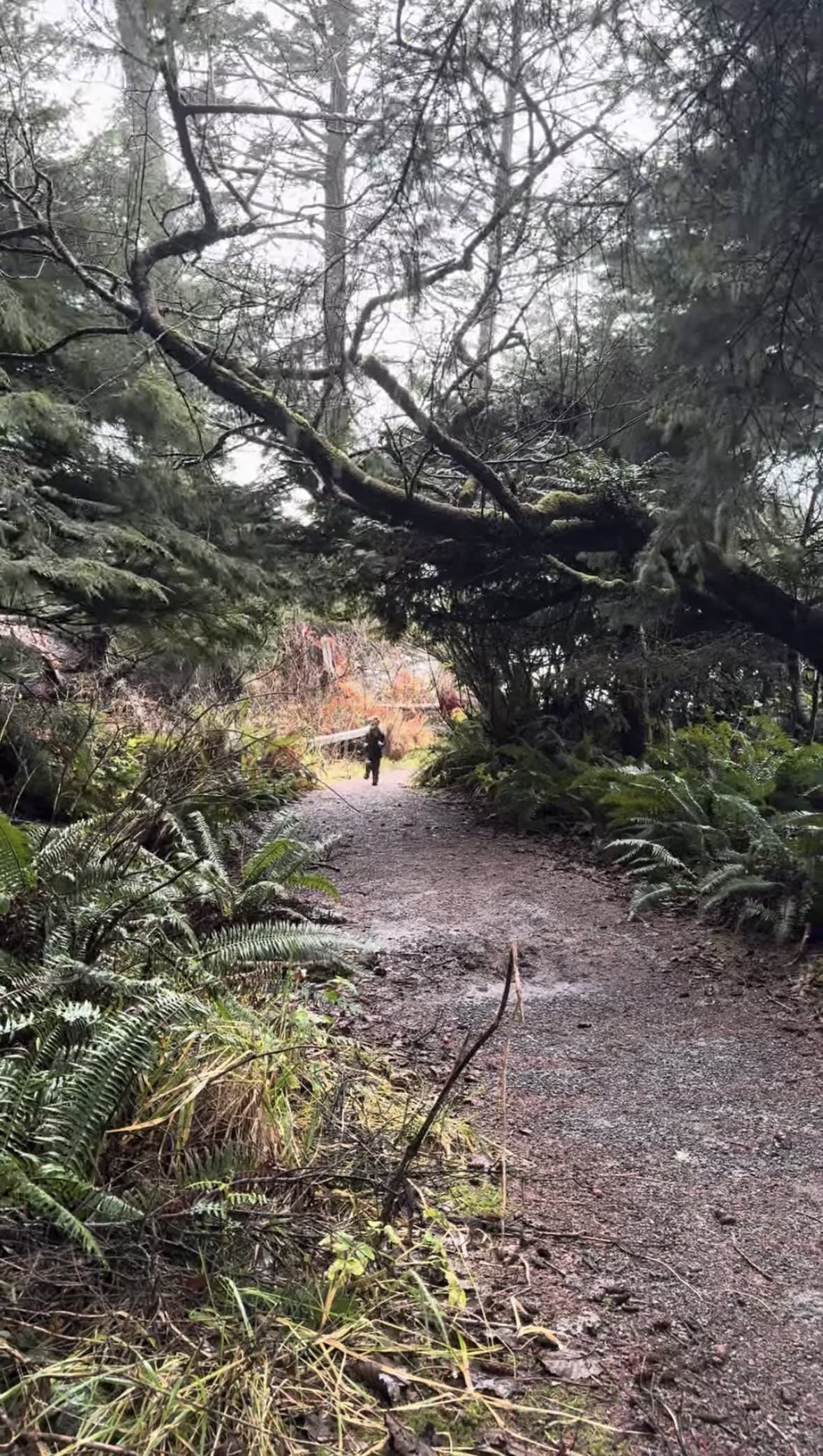
All distances are round trip. The Hoh's secret is that its long trail is flat, so the only question is how far down it your crew wants to wander before turning around.
Hall of Mosses
Spruce Nature Trail
Hoh River Trail to Mt. Tom Creek Meadows
Hoh River Trail to Five Mile Island
Hoh River Trail to Glacier Meadows
The Hoh River Trail meets you where you are
Most national park showpiece trails climb. This one doesn't. The Hoh River Trail runs nearly flat for its first several miles, which means a four-year-old can do a mile of world-class old growth and a twelve-year-old can push to Five Mile Island, all on the same trail. Walk until the snacks run low, picnic on a gravel bar, turn around. Rain gear every season, and give any elk on the trail the full 75 feet; the trail waits, you can too.
when you need a break
Easy backups for slow days
The Hoh is already the slow day. These are the ways to slow it down even further.
Rock throwing on the Hoh River
Pick any pullout along Upper Hoh Road, walk down to the gravel bar, and let the kids throw rocks into glacial-blue water for an hour. Costs nothing, entertains everyone, and the mountain views come free.
Junior Ranger badge day
Make the workbook the whole agenda. Kids interview a ranger, sketch moss, log elk signs, and walk out with a wooden badge they'll keep on the van dash for the rest of the trip.
The moss counting game
Pick one bigleaf maple on Hall of Mosses and count how many different plants are living on it. The record in this forest is dozens on a single tree. Suddenly everyone's a scientist.
Lunch at Hard Rain Cafe
The halfway-point diner makes the drive out feel like part of the day instead of just the exit. Burgers, fries, and a porch that's seen every kind of rain.
Embrace the rainy day
Rain is when the Hoh shows off. The moss goes electric green, mist hangs in the canopy, and the crowds evaporate. Good rain gear turns the "bad weather" day into the one you'll talk about most.
Sunrise walk, then a nap
Camping at the Hoh? Do Hall of Mosses at first light, be back at the tent by 9, and let everyone nap while the day-trippers fight for parking. You already won.
food, by meal
Where we eat at the Hoh
One cafe on the whole road, no food at the visitor center beyond the gift shop. The Hoh runs on whatever you packed in Forks, and that's honestly part of the fun.
Breakfast
Where to start the day
Eat in Forks before you drive out (The In Place for the diner breakfast, Forks Outfitters for grab-and-go) or do camp breakfast at the Hoh Campground with elk possibly wandering past. Hard Rain CafeCasual serves breakfast too if you'd rather stop halfway up the road.
Lunch
The cooler is the restaurant
Pack sandwiches from the Forks Outfitters deli and eat at the visitor center picnic area or on a river gravel bar. There's nothing for sale in the valley itself, so what's in the cooler is lunch.
Hard Rain CafeCasual
The only restaurant on Upper Hoh Road, halfway between 101 and the visitor center. Burgers, fries, breakfast plates, and a little store with snacks and forgot-its. The move: hike in the morning, stop here on the drive out for a late lunch, and roll back to Forks full and happy.
Dinner
Back in Forks
Dinner means the drive back to town: Pacific Pizza for the family sit-down, Sully's Drive-In for burgers in the car, The Kitchen if you make it before they close. After a full Hoh day, nobody argues about pizza.
Treats: Whatever the kids talk you into at Hard Rain Cafe on the way out, and JT's Sweet Stuffs waiting back in Forks for the milkshake vote. Earned, all of it.