Three
regional deep dive · part one
The Olympic Peninsula
Mountains. Rainforests. Sea stacks. Hot springs. Lavender fields. All on one peninsula. The most magical week you can give your family in the PNW.
If you only have time for one corner of the Pacific Northwest, make it this one. I'm not even going to pretend that it's not my FAVORITE! You can stand on a snowy ridge at 5,000 feet in the morning, walk through a dripping, mossy rainforest after lunch, and watch the sun drop behind sea stacks that same night. Same day. Nowhere else in the lower 48 lets you pull that off in one loop.
This page is your bird's eye view. Every area below has its own page with the good stuff. Food, hikes, where to sleep, drive notes, what to pack, what to do on a slow day. Tap into whichever one you're headed to and go deep.
around the loop
to see it well
mountain · forest · coast
olympic national park
getting oriented
How the peninsula is laid out
Maps treat the peninsula like one place. It's really four different worlds with one long road holding them together.
Here's the lay of the land. The Olympic Peninsula is the big chunk of Washington west of Seattle that sticks out into the Pacific, with water on three sides. Puget Sound to the east, the Strait of Juan de Fuca up top, the open ocean on the west. Almost the entire middle is Olympic National Park, about a million acres of mountains, glaciers, and rainforest. The towns hug the edges.
Highway 101 runs one giant loop around the outside, and that's it. There are no roads through the middle. Zero. If you're at the Hoh Rainforest and want to get to Hurricane Ridge, you drive the long way around. Burn that into your brain now, because it changes how you plan everything.
The four regions you'll move through
The peninsula's geography breaks into four distinct areas:
North side (mountains & lakes)
Port Angeles, Hurricane Ridge, Lake Crescent, Sol Duc Valley, Sequim, Port Townsend, Dungeness Spit. The most hotels and food, and Hurricane Ridge is your easiest way up into the high country.
West side (rainforest & coast)
Forks, La Push, the Hoh Rainforest, Quinault, and beaches like Rialto, Ruby, and Kalaloch. This is where the magic happens. Also where the drives get long and the towns get scrappy. Worth it.
South side (rainforests, quieter)
Lake Quinault, the Quinault Rainforest, the Aberdeen-Hoquiam area. Most people blow right past this side. Their loss. Quinault sees a fraction of the Hoh's traffic.
East side (Hood Canal)
Hood Canal, Brinnon, Hoodsport, and the Staircase corner of the park. Closest to Seattle and wildly underrated for families. Old-growth forest with way fewer people in it.
The drives run long out here. Plan around them
Port Angeles to the Hoh is about 90 minutes each way. The Hoh to Lake Quinault, another hour and change. Quinault back to Olympia, two more hours. The peninsula is way bigger than it looks on the map, and it does not care about your schedule.
Sleep at least one night in every region you visit. If you try to day-trip it all from one base, you'll spend half your vacation buckling and unbuckling kids. And the current-year alerts (road closures, shuttle dates, seasonal openings) live on each area page below, so check your stops before you lock anything in.
The Olympic Peninsula holds three of everything
This is one of the only places on earth where glacier mountains, rainforest, and wild ocean coast all fit inside a single day. That combo is why it's a national park and a UNESCO World Heritage Site. The whole peninsula is one big outdoor classroom.
We turned that into actual lessons. Our roadschool curriculum has a full unit for this region, the science of how the rainforest stays so wet, the story of the Quileute people, the tide pools, the elk. Same trip, now your kids are learning while you drive it.
See the curriculum →explore each area
tap into your stopsSeven places worth your real attention
Each one has its own page with food, hikes, where to stay, drive notes, slow-day ideas, and where to restock snacks before somebody melts down.
your home base
Port Angeles
The hub town for everything on the north side. Where most families spend at least two nights.
the easy mountain
Hurricane Ridge
Sea level to 5,242 feet on a paved 17-mile road. The easiest alpine wow in the PNW.
the deep blue
Lake Crescent
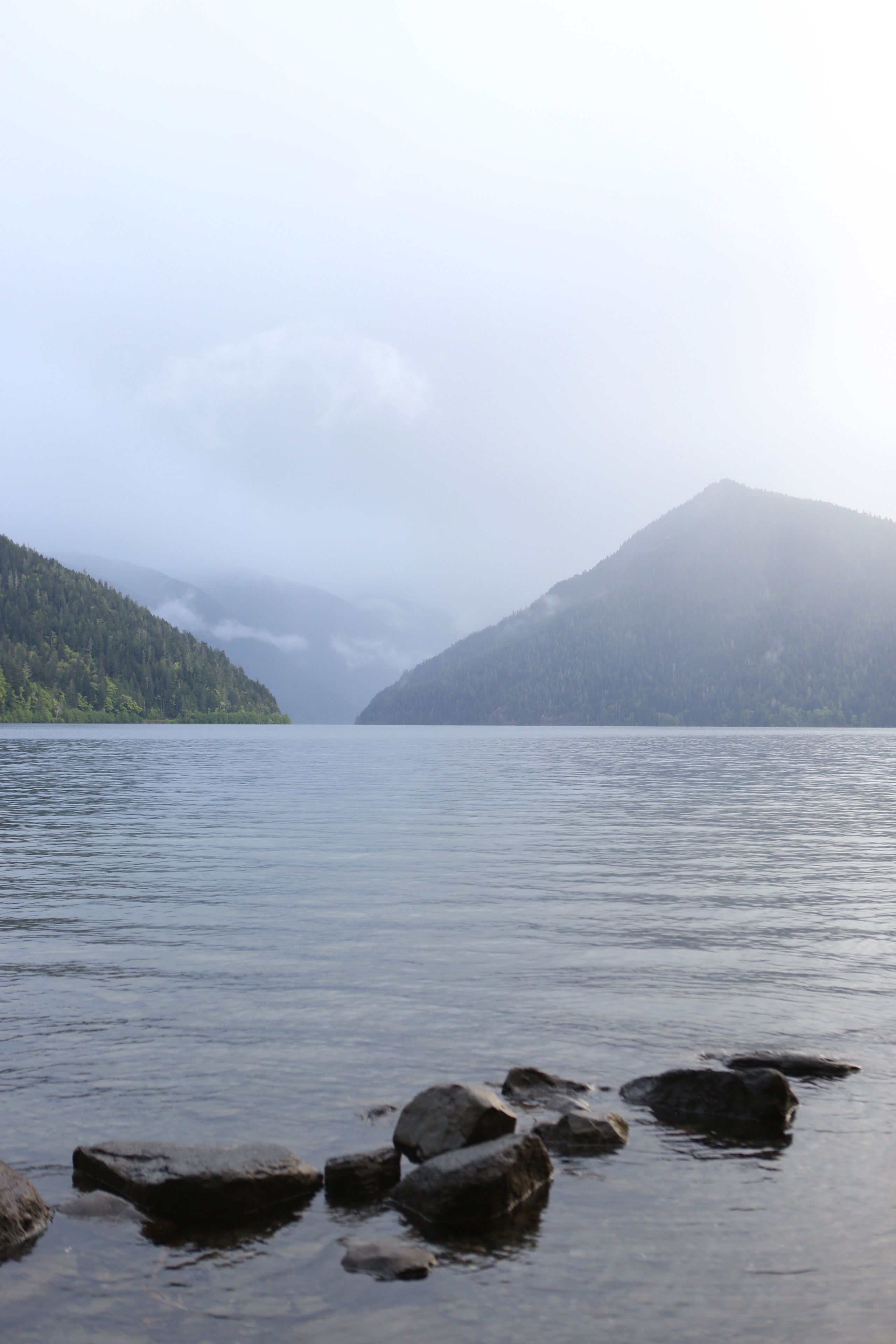
A glacially carved lake so deep and clear the water looks fake. Plus the most photogenic lodge in the PNW.
the hot springs
Sol Duc Valley
Old-growth forest, three mineral hot spring pools, and one of the prettiest waterfalls in the park.
it's pronounced skwim
Sequim & Dungeness
The peninsula's sunny corner, lavender capital of North America, and home to the longest natural sand spit in the country.
the victorian
Port Townsend
A perfectly preserved Victorian seaport at the very tip of the peninsula. Old buildings, a ferry to the islands, and the kind of town that has you checking real estate listings from the car.
the underrated
Hood Canal
The eastern side of the peninsula. Closest to Seattle and skipped by almost everybody. Old-growth forest, working oyster farms, and the quietest way into Olympic National Park.
putting it together
How to plan your time
The loop works in a few different shapes depending on how many days you've got. Real talk below.
If you have 2-3 days
Pick one base and stay put. Port Angeles gets you Hurricane Ridge, Lake Crescent, and Sol Duc without anyone living out of the car. Or base in Hood Canal and do Staircase plus the eastern slopes. You'll see one side of the park well instead of all of it badly.
If you have 4-5 days
Now you can do the whole loop. Day 1: ferry across to Port Angeles, Hurricane Ridge in the evening. Day 2: Lake Crescent and Sol Duc. Day 3: head west to Forks (Chapter 4 is all about that). Day 4: Hoh Rainforest and the Pacific beaches. Day 5: home by way of the south side, or back through Hood Canal.
If you have 7+ days
Now you get to breathe. Add a night in Port Townsend, a lavender day in Sequim, an extra night on the coast, a lazy Hood Canal day on the way home. Seven to ten days is the version where nobody cries in the car. Mostly.
Direct route picks for the Olympic Peninsula
Want it planned out day by day? The Routes chapter has these ready to go:
→ Classic Olympic Peninsula Loop (5 days)
→ Olympic Peninsula Deep Dive (7 days)
→ Slow Nature Loop (10 days)
→ Kid-Focused Gentle Loop (perfect for families with toddlers)
→ Hood Canal Quick Weekend (2-3 days)
This place pays you back for going slow
The biggest mistake families make out here is cramming. Yes, you can technically drive the whole 330-mile loop in two days. You can also eat Thanksgiving dinner standing over the sink. Neither one is a vacation.
Fewer stops, longer at each one. Let the kids throw rocks into Lake Crescent for 90 minutes. Park yourselves on a beach and just watch the waves roll in. Order the slow dinner at Lake Crescent Lodge. This place pays you back for dropping the pace.